Editor's note: To be clear, this essay is not an attempt to prescribe or ascribe right and wrong to a political party. It is an attempt to analyze how rhetorical tools, narratives and storytelling shape a republic in the middle of an election.
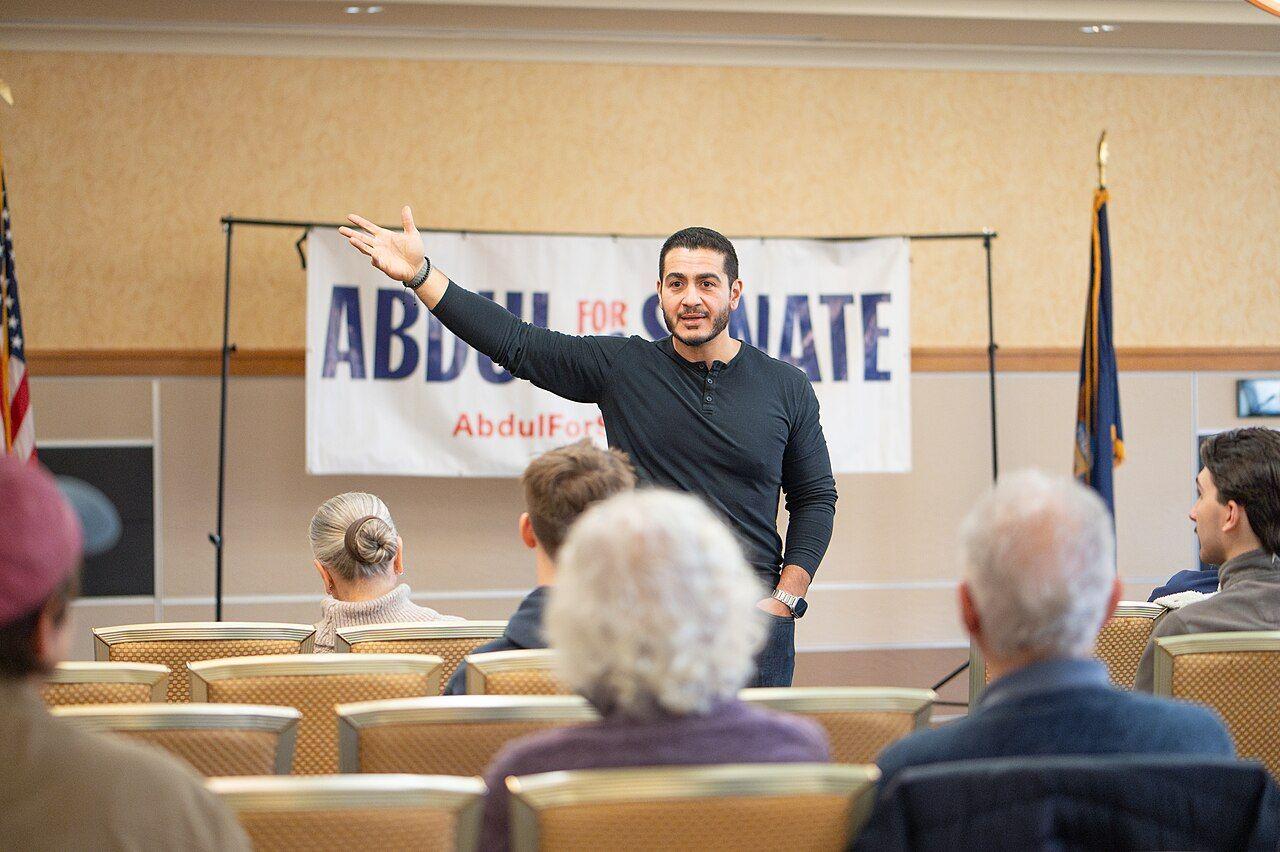
In October, in the small town of Caro, Michigan, a voter named Tommy stood up at a town hall and asked Abdul El-Sayed, a Muslim running for the Senate, to disavow the Muslim Brotherhood. El-Sayed answered the question directly ("Sure. Yeah, absolutely.") before he asked Tommy why he felt the need to ask it.
In Houston, a woman at a town hall shouted at James Talarico, the Democrat running for Senate in Texas, "You answer our questions, or you suffer the consequences!" Talarico did not shout back. He said, "I'm happy to engage," and told the room, "This is what this conversation's supposed to be about."
In Kansas, a challenger named Adam Hamilton agreed to debate a sitting senator, Roger Marshall. A clip from that debate spread widely online, and Roll Call reported that it helped Hamilton. On Tuesday he won.
In Texas, Talarico's opponent, Attorney General Ken Paxton, had agreed to debate him. Then the debate offers went unanswered, and the two never met on a stage. Talarico won by twelve points.
These stories come from different states and very different candidates. What they have in common is a choice. Each candidate either showed up in front of people who might not like them, or decided not to. Researchers have studied for decades what actually persuades voters, and this election turned out to be a good test of what they found.
I The empty stage
Paxton was not unusual. This year, a record number of candidates refused to debate their opponents. According to ABC News, 21 of the 36 races for governor had no debate between the two major-party candidates. In 2022 that number was 8, and in 2018 it was 2. In the Senate, 21 of 35 races had no debate scheduled as of late September.
- Outline: all 36 governor races that year
Mississippi, 0.78 points Cindy Hyde-Smith declined to debate. Scott Colom won the seat.
The three closest races of the year all went without a debate.
How this was counted
A race counts as debated when the two main candidates met on one stage before the general election. In Idaho, Montana, Nebraska and South Dakota the main challenger was an independent, so the margin and the debate are counted against the independent. Delaware's only meeting was a Rotary Club candidate forum and New Mexico's an interview-style forum that may not have been joint, so both are outlines.
Of the 17 races without a debate, seven are confirmed (a candidate declined or stayed away, or the debate was cancelled: Arkansas, Florida, Louisiana, Mississippi, Texas, Virginia and Wyoming), three are inferred because none was reported after mid-October (Idaho, North Carolina and South Dakota), and in seven no debate could be found in local news or on the state's election page (Alabama, Ohio, Oklahoma, Oregon, Rhode Island, Tennessee and West Virginia).
ABC News counted 21 of 35 races with no debate scheduled as of September 25. This count was made after the election, on November 14, so debates arranged in October count here as debates. Margins are unofficial results from each state's election page; Alaska was still counting, and its margin is the first-choice count.
Debated: Alaska, 3.75 points; Iowa, 4.19 points; South Carolina, 4.50 points; Kansas, 5.06 points; Nebraska, 5.90 points; Maine, 6.20 points; Michigan, 7.08 points; Minnesota, 10.14 points; Montana, 10.42 points; Kentucky, 12.09 points; New Hampshire, 13.72 points; Georgia, 18.06 points; Colorado, 25.38 points; Illinois, 25.40 points; New Jersey, 27.20 points; Massachusetts, 31.25 points.
No debate: Mississippi, 0.78 points; Louisiana, 1.76 points; Florida, 2.88 points; Ohio, 4.86 points; Alabama, 9.42 points; Arkansas, 11.85 points; Texas, 12.09 points; Tennessee, 12.17 points; Oklahoma, 17.90 points; Oregon, 19.50 points; North Carolina, 19.80 points; West Virginia, 20.42 points; South Dakota, 21.00 points; Idaho, 22.99 points; Virginia, 23.21 points; Wyoming, 30.31 points; Rhode Island, 37.53 points.
Only a forum, or not confirmed: New Mexico, 26.52 points; Delaware, 27.05 points.
Candidates from both parties made this choice. Senator Tommy Tuberville, the Republican running for governor of Alabama, explained why he would not debate his opponent: "there's so much difference between us. I mean, there's no reason to get up there and argue about differences of opinion." In Ohio, Democrat Amy Acton declined to debate Vivek Ramaswamy because she did not want to give a platform to what she called his "baseless lies." In Arizona, Governor Katie Hobbs declined as well, and her campaign said that meeting voters face to face was "more effective than a stage designed for short soundbites and political theater."
Hobbs's campaign has a point, and it is one we share at Meridian. Debate formats have real problems. Presidential debates in particular give candidates ninety seconds to answer questions that deserve an hour, reward the best one-liner over the best answer, and often tell an audience less about a candidate than they should. But a flawed format is a reason to improve debates, not to skip them. (For more on how we would reform presidential debates, read "Reforming American presidential debates," an excellent piece by Dr. Ben Voth, a Meridian fellow.) Even a bad debate puts a candidate in front of questions they did not write and an opponent they did not choose. Research backs this up. A review of studies on presidential debates by William Benoit and his colleagues found that watching debates increases what voters know about the issues and changes how they see the candidates.
Tuberville's reason shows the problem most clearly. A debate exists because two candidates disagree. Voters need to see that disagreement tested. A candidate who refuses to debate is asking voters to decide without that test.
In place of debates, many candidates leaned on rallies, with bigger stages and louder crowds made up mostly of people who already agreed with them. In a way this is a strange parallel to the echo chambers that social media feeds are often blamed for, where people hear mostly from those who share their views, and a rally, like a feed, can leave a candidate with the impression that everyone is on their side, which is exactly the impression a debate would have corrected.
Some candidates found other ways to face open questions. In October, CNN and Jubilee, a media company known for videos in which one person faces a room of people who disagree with them, hosted a town hall with Talarico. The audience included Democrats, Republicans and independents, and he took their questions live. Paxton was invited to a town hall of his own. He had already declined to debate.
The candidates who avoided the stage did not all lose, but several of the most visible ones did. Paxton lost by twelve points. In South Carolina, Senator Lindsey Graham died in July, and his sister Darline Graham was appointed to his seat and became the Republican nominee. Her challenger, Annie Andrews, asked for four debates, and Graham agreed to one. Andrews won. She is the first woman elected to the Senate from South Carolina and the first Democrat to win a Senate race there since 1998.
One exception is worth naming. Amy Acton refused to debate and still won in Ohio. Skipping a debate does not always cost a candidate the race. What it always costs is the voters' chance to see the disagreement tested.
II How big this election was
On November 3, Democrats gained around forty seats in the House and at least seven in the Senate, including seats in Texas, Kansas and South Carolina. CBS projects that Democrats will hold between 251 and 268 House seats once every vote is counted.
That is an unusually large change. The president's party almost always loses seats in a midterm, usually around twenty-five in the House. The last time one party made gains this large in both the House and the Senate in a single election was 1994, when Republicans gained fifty-four House seats and eight Senate seats.
- A typical midterm loss for the president’s party: about 25 seats
- 2026: projected, counting continues
The size of the swing matters because of what research says about persuasion. In 2018, the political scientists Joshua Kalla and David Broockman set out to measure how many votes campaigns actually change, and their conclusion was blunt:
"We argue that the best estimate of the effects of campaign contact and advertising on Americans' candidates choices in general elections is zero."
Joshua Kalla and David Broockman, "The Minimal Persuasive Effects of Campaign Contact in General Elections," American Political Science Review, 2018
Their own nine experiments, they wrote, had an average effect that "is also zero." In other words, most voters do not change sides because a campaign asked them to. Studies of television advertising find somewhat more movement, especially in races for governor, Senate and House, so the fair reading is not that campaigns change no minds but that they change far fewer than they believe. When an election moves this far anyway, whether because voters switched sides or because one side's voters stayed home, something real has gone wrong for the party that lost them, and the explanation has to be bigger than one campaign's ads.
Many on the losing side have blamed the result on something other than the voters. The President said, "If I was on the ballot, we would have won." The Vice President said, "the reason we lost is the war." Anyone who has been to a debate tournament has heard the same thing from a team that just lost: the judge wasn't paying attention, or the topic favored the other side. It is a natural reaction, and it moves the blame away from the argument itself.
Others gave a more honest reading. Ronna McDaniel, the former chair of the Republican National Committee, said, "You don't win Texas, you don't win Kansas, you don't win South Carolina without Republican voters actually crossing over." Senator Ted Cruz said his party had failed to address a "real economic disconnect" over the cost of living, and called the result a "Watergate-level repudiation." That is a striking thing for Cruz to say, since he built his national reputation as one of the least compromising members of his party. Whether his comments this week are an honest assessment or a political move, they show a pattern. Before a loss, leaders tend to defend their platform. After a loss, they are more willing to admit what voters were telling them.
III The candidates who stayed in the room
If voters were persuaded, the next question is what persuaded them. You could write a whole series on the exit polls. This essay looks instead at the campaigns, and at how some of the most controversial candidates handled audiences that did not like them.
The first lesson from the research is to start from what the audience already believes. In a 2015 paper, the psychologists Matthew Feinberg and Robb Willer found that most people try to persuade the other side by arguing from their own values, and that the arguments which do persuade are the ones reframed in the values of the people they are meant to reach. The paper explains why:
"Reframed moral appeals were persuasive because they increased the apparent agreement between the political position and the targeted individuals' moral values."
Matthew Feinberg and Robb Willer, "From Gulf to Bridge," Personality and Social Psychology Bulletin, 2015
Feinberg put the lesson more simply: "Most people are not very good at appealing to other people's values."
9%
of liberals asked to persuade conservatives on same-sex marriage used an argument built on conservative values. The rest argued from their own.Feinberg and Willer, 2015.
Talarico's campaign is a clear example of the research in practice. His central line was "Love God and love neighbor," and he told one church, "I want to speak to you this morning, not as a candidate, but as a fellow Christian." The line is simple enough to sound naive, but nearly everyone in the room already agreed with it.

The second lesson is about tone. In 2005, Diana Mutz and Byron Reeves showed viewers two versions of the same televised debate, identical in every argument but polite in one and uncivil in the other, and the uncivil version lowered viewers' political trust, including their trust in politicians. The authors summarized it this way:
"The format of much political television effectively promotes viewer interest, but at the expense of political trust."
Diana Mutz and Byron Reeves, "The New Videomalaise," American Political Science Review, 2005
Disagreement itself did no harm. In their words, "televised presentations of political differences of opinion do not, in and of themselves, harm attitudes toward politics and politicians." What did harm was the way the disagreement was delivered.
Attacks have a similar record. Richard Lau, Lee Sigelman and Ivy Brown Rovner reviewed 111 studies of negative campaigning in 2007 and found that attack ads were more memorable than positive ones but no better at winning votes, and that they slightly lowered people's trust in government and their sense that their vote mattered. Later work has only sharpened the point, since a 2020 study that showed forty-nine real ads from the 2016 presidential race to 34,000 people found that attack ads worked no better than positive ones, and that neither moved many votes.
- 5 helped the attacker
- 5 backfired on the attacker
- 33 others
Ohio gave a live example of an attack backfiring this fall. In the closing weeks, Vivek Ramaswamy's campaign for governor spent about $4 million airing an ad in which Amy Acton's estranged mother called her "a liar." Some of the strongest criticism came from his own side. Casey Putsch, who had run against Ramaswamy in the Republican primary, wrote, "I'm a Republican, but I'm crossing party lines to vote for Amy." Nikki Haley wrote of Ramaswamy, "He's a bad guy." Axios reported that a Republican poll taken after the ad showed Acton's lead growing from two points to eight, and Acton, who had already led several polls before the ad aired, won by nearly eight points.
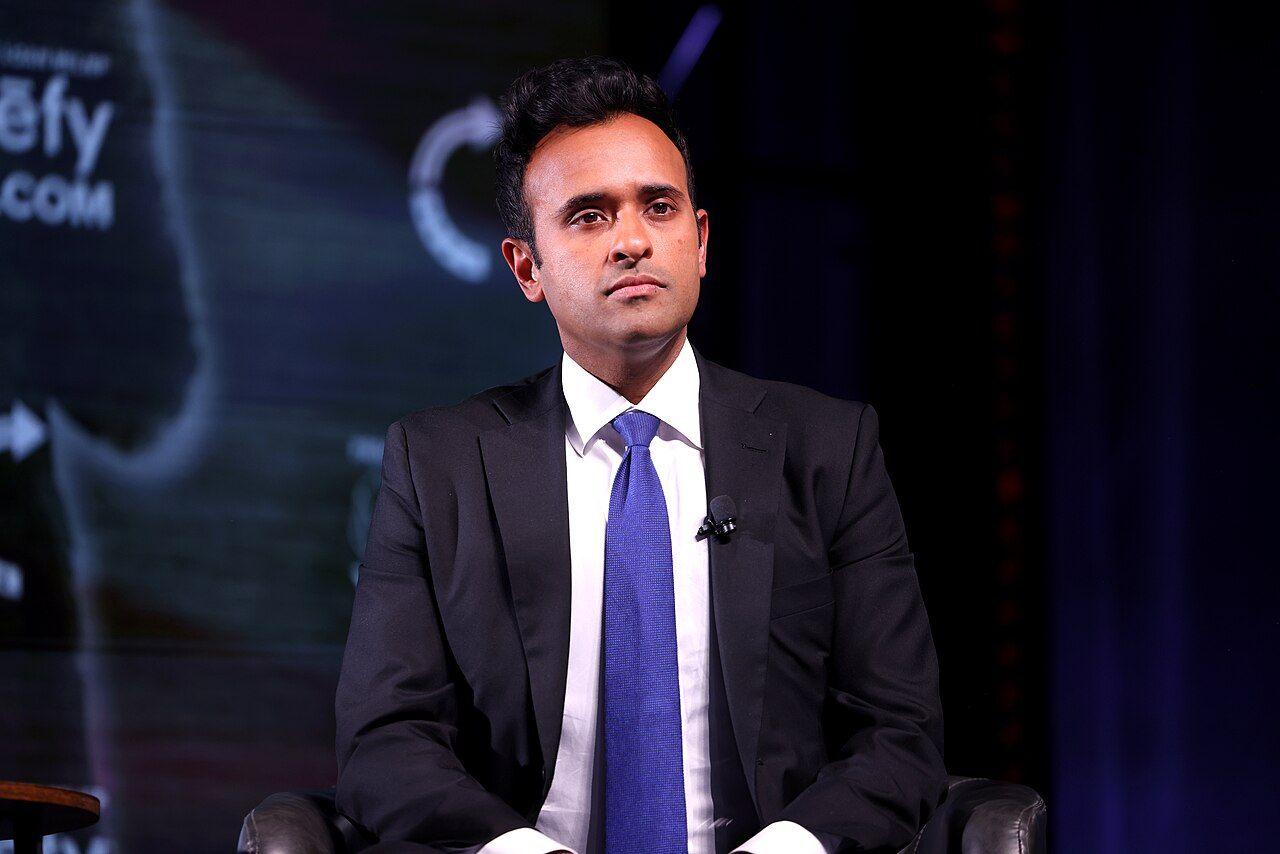
Americans know this pattern well. In a 2019 Pew survey, 85 percent said political debate had become more negative and less respectful. It is not hard to see why a candidate who is insulted would feel pressure to insult back.
Some candidates did not. El-Sayed spent the fall under attack over his faith. Critics circulated a 2018 clip of him and asked whether he had ties to the Muslim Brotherhood, although Fox News reported it had found none. He kept holding town halls in places like Caro, where many in the crowd were not his voters. That exchange with Tommy did turn sharp. After answering, El-Sayed told him, "it's you who needs to understand the Constitution, not me," and Tommy walked out. But El-Sayed answered the question before he challenged it, and on Tuesday he won Michigan's open Senate seat.
Some Republicans made the same choice in a hard year for their party. Mike Flood, a Republican congressman from Nebraska, kept holding town halls after many of his colleagues stopped. At one in Bellevue in July, the crowd booed him again and again, and one person shouted that he was a liar. Flood stayed and kept answering. He told the Nebraska Examiner that town halls are "part of the job" and that "nothing gets better if we're not talking to each other." On November 3, in a district Democrats had targeted, he won reelection.
Other candidates made the opposite choice. In Alabama, a Republican congressman who was heckled at his own town hall left through the back door. In Maine, Graham Platner, the Democratic candidate for Senate, called a senator from his own party an "a--hole" in front of a friendly crowd.
The calmer candidates were drawing on an older standard, the one Americans once expected from their presidents. Calvin Coolidge held more than five hundred press conferences as president, so he did not avoid questions, but what he did avoid was answering anger with anger.
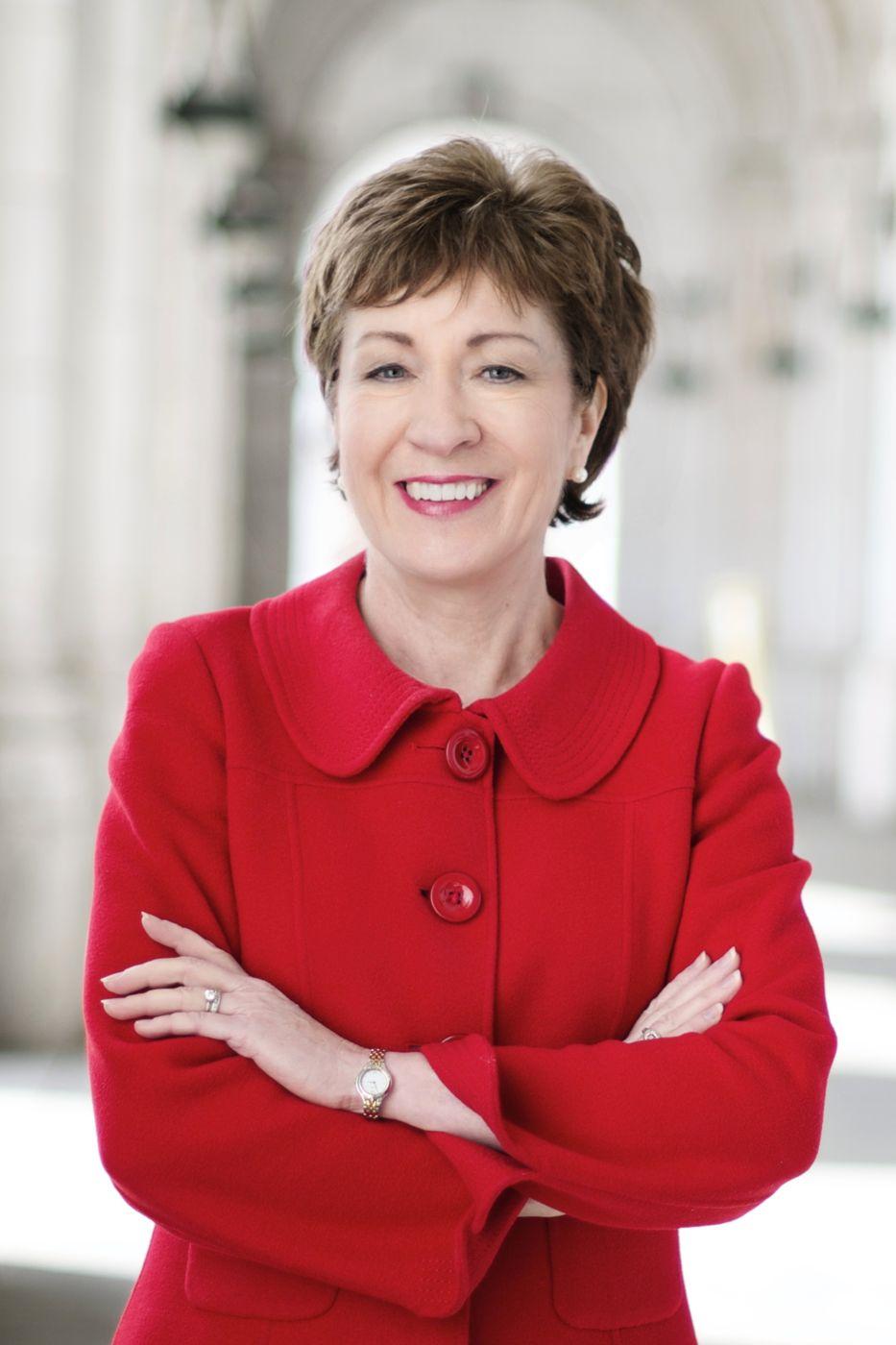
Composure did not win every race. In Maine, Senator Susan Collins tried to reason with protesters chanting "Shame!" at one of her events, and she still lost. She lost to Platner, the same candidate who had insulted a senator from his own party. What the research and this election suggest together is narrower: in a year when many voters were angry, the candidates who stayed and answered hard questions gave voters a reason to listen.

IV What this means outside of politics
The same lesson applies to companies, schools, churches and community groups. An organization that stops facing its audience, and keeps talking mainly to its own leaders while people grow unhappy, is making the same choice as a candidate who skips the debate. Audiences often tolerate this kind of drift for a long time, and then change all at once.
At Meridian, this is why we care about debate. Our founding essay says, "Debate cannot protect the truth in a room that has already made up its mind." This election showed that minds are less fixed than we often assume. That is encouraging, because honest persuasion still works. It is also a warning, because the same openness that lets a good argument persuade people also lets fear and flattery persuade them.
The candidates who earned a hearing this year were not the ones with the sharpest attacks. They showed up to debates and town halls where they were not welcome, started from what their audience already believed, kept their composure when the room turned on them, and answered the hard questions when they were asked.
That is why the drop in debates is a worrying trend and one worth reversing. A campaign that wants to show it is listening to citizens' concerns can do so by meeting the other side in public, without gotchas and with civility and respect, and that may be a better way forward for candidates of either party.
About the author
Justus Aryani is a co-founder of Meridian. He won the inaugural Coolidge President's Cup, is Assistant Director of Ziggy Online Debate, an online tournament host that has served more than 2,000 students in five countries, and works part time helping build the Coolidge Presidential Foundation's debate program.
About Meridian
Meridian was founded by Justus Aryani and Nathan Chen to teach people how to make an honest case to an audience that does not already agree with them. It coaches debaters one on one, helps schools, clubs and leagues build their own debate programs, runs camps and workshops, and builds Atlas, software for hosting debate tournaments and public discussion. For businesses and other organizations, where the same skills decide whether a pitch, a hard meeting or a public statement earns a hearing, Meridian offers speech guidance, speaker coaching, and debate as an exercise in team communication. The Hearing is Meridian's newsletter. You can subscribe at meridiandebate.com/newsletter.
Sources
Research
Benoit, Hansen and Verser, "A Meta-Analysis of the Effects of Viewing U.S. Presidential Debates," Communication Monographs, 2003.
Kalla and Broockman, "The Minimal Persuasive Effects of Campaign Contact in General Elections: Evidence from 49 Field Experiments," American Political Science Review, 2018.
Feinberg and Willer, "From Gulf to Bridge: When Do Moral Arguments Facilitate Political Influence?" Personality and Social Psychology Bulletin, 2015.
Mutz and Reeves, "The New Videomalaise: Effects of Televised Incivility on Political Trust," American Political Science Review, 2005.
Lau, Sigelman and Rovner, "The Effects of Negative Political Campaigns: A Meta-Analytic Reassessment," Journal of Politics 69(4), 2007.
Pew Research Center, "Public Highly Critical of State of Political Discourse in the U.S.," Jun 19, 2019.
Coppock, Hill and Vavreck, "The Small Effects of Political Advertising Are Small Regardless of Context, Message, Sender, or Receiver," Science Advances, 2020.
Sides, Vavreck and Warshaw, "The Effect of Television Advertising in United States Elections," American Political Science Review, 2022.
Ansolabehere, Iyengar, Simon and Valentino, "Does Attack Advertising Demobilize the Electorate?" American Political Science Review, 1994. Wattenberg and Brians, "Negative Campaign Advertising: Demobilizer or Mobilizer?" American Political Science Review, 1999.
Krupnikov, "When Does Negativity Demobilize?" American Journal of Political Science, 2011.
Aggarwal and others, "A 2 Million-Person, Campaign-Wide Field Experiment Shows How Digital Advertising Affects Voter Turnout," Nature Human Behaviour, 2023.
2026 election
ABC News, Sep 25, 2026 (debate counts; Tuberville, Acton, Hobbs; Paxton's commitment); ABC results Nov 6 (Talarico 55%, Paxton 43%).
Newsweek, Oct 21, 2026 (Ramaswamy ad: $4M, Putsch, Haley). Axios, Oct 28, 2026, "Ad backfiring on Ramaswamy, GOP poll finds" (47 to 45 before the ad, 50 to 42 after). Al Jazeera, Oct 24, 2026 (Acton leading before the ad). 270toWin (Acton and Brown won). Ohio results: Acton 52.3 percent, Ramaswamy 44.4 percent.
Bloomberg Businessweek, Oct 27, 2016 ("three major voter suppression operations").
TIME, Oct 13, 2026 (Brookings debate figures). Roll Call, Oct 1, 2026 (Graham and Andrews; Hamilton-Marshall clip).
TheWrap and AV Club, Sep 28, 2026 (CNN/Jubilee town hall, Oct 14; Paxton invited).
Live 5 News, Jul 14, 2026 and WFAE, Sep 22, 2026 (Lindsey Graham's death; Darline Graham's appointment; SC's last Democratic Senate win in 1998).
CBS News live results, Nov 5, 2026 (seat projections; McDaniel, Cruz, Trump, Vance). Northeastern, Nov 2026 (flips; El-Sayed).
Newsweek, Oct 18, 2026 (Caro). Fox News, Sep 24, 2026 (2018 clip). NPR via HPPR, Aug 10, 2026 (Talarico's faith message). Mediaite (Houston).
Nebraska Examiner, Jun 1, 2026 and ABC News, Jul 8, 2026 (Flood's town halls). AP race call via SooToday, Nov 2026 (Flood reelected).
Daily Beast, Aug 29, 2025 (Moore). Fox News, Jun 8, 2026 (Platner). Fox News, Aug 27, 2025 (Collins).
Further reading
Ben Voth, "Reforming American presidential debates," SMU News, May 28, 2015.
History
1994 seat changes; Cruz's 2013 floor speech.
Kennedy, Greater Houston Ministerial Association, Sep 12, 1960. Acts 17:22-23.
Washington, Rules of Civility, rule 1. Coolidge: Washburn, Calvin Coolidge: His First Biography (1923); press conference count from the American Presidency Project.
Lincoln-Douglas debates, 1858; no presidential debates 1964 to 1972. The Whig Party after 1852.
The Case for Debate, IV.
Hamilton's win in Kansas; Darline Graham's loss and Andrews's win; Collins's loss and Platner's win; El-Sayed's win.
Edits
November 13, 2026, edited to reflect that Lau, Sigelman and Rovner found attack ads no better than positive ads at winning votes, that they only slightly lowered trust in government and voters' sense that their vote mattered, and that attack ads were also more memorable.
November 13, 2026, edited to reflect a 2020 study of forty-nine real campaign ads that found attack ads worked no better than positive ones.
November 13, 2026, edited to reflect research on whether attack ads keep voters home, a strategy some campaigns have claimed to use but studies have not shown to work reliably.
November 13, 2026, edited to reflect that television ads move somewhat more votes in races for governor, Senate and House than field experiments suggest.
November 13, 2026, edited to reflect that Acton already led several polls before the Ramaswamy ad aired, and the size of her lead in the Republican poll.
November 13, 2026, edited to reflect Pew's figure of 85 percent, in place of an unsourced claim that voters now expect an insulted candidate to insult back.
November 13, 2026, edited to reflect that the attack ad chart counts the remaining 33 studies without saying what they found.